Recruit & Schedule
DRDB coordinates participants, eligibility rules, study visits, reminders, and research team workflows.
We build tools that support recruitment, multimodal behavioral measurement, and reproducible analysis.

Together, these projects support the full research cycle from family recruitment to interpretable measures of attention and behavior.
DRDB coordinates participants, eligibility rules, study visits, reminders, and research team workflows.
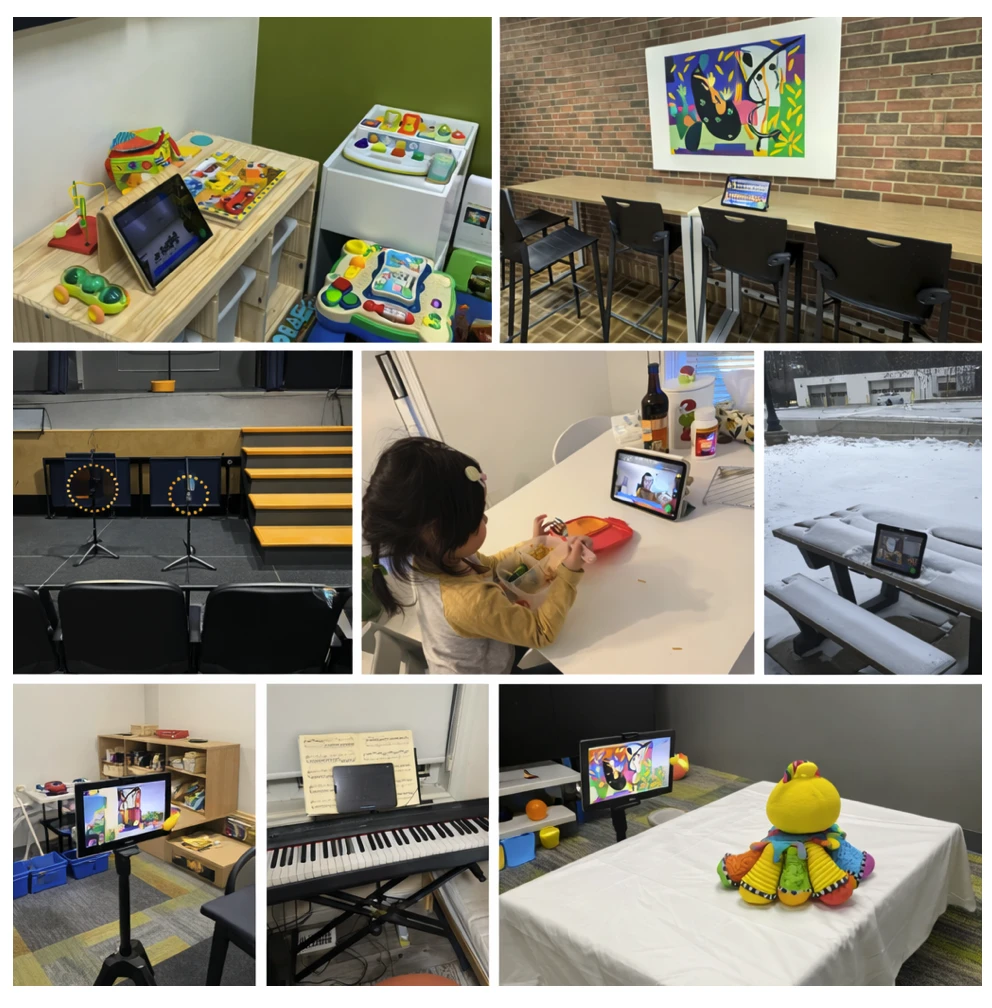
Expressions captures synchronized facial, movement, audio, and video data with consumer Apple devices.
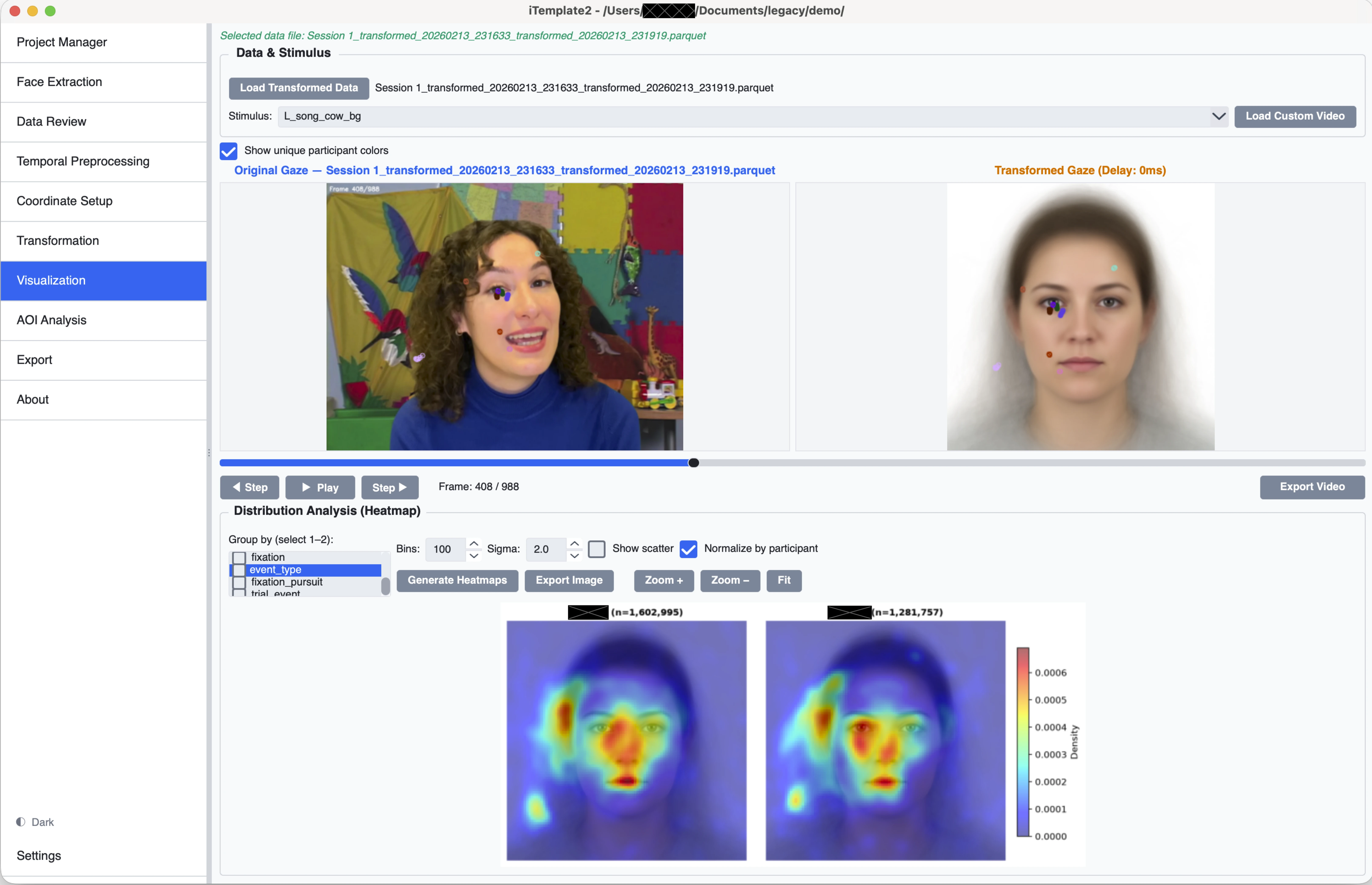
iTemplate2 maps gaze data onto a shared facial template for heatmaps, quality control, and AOI analysis.
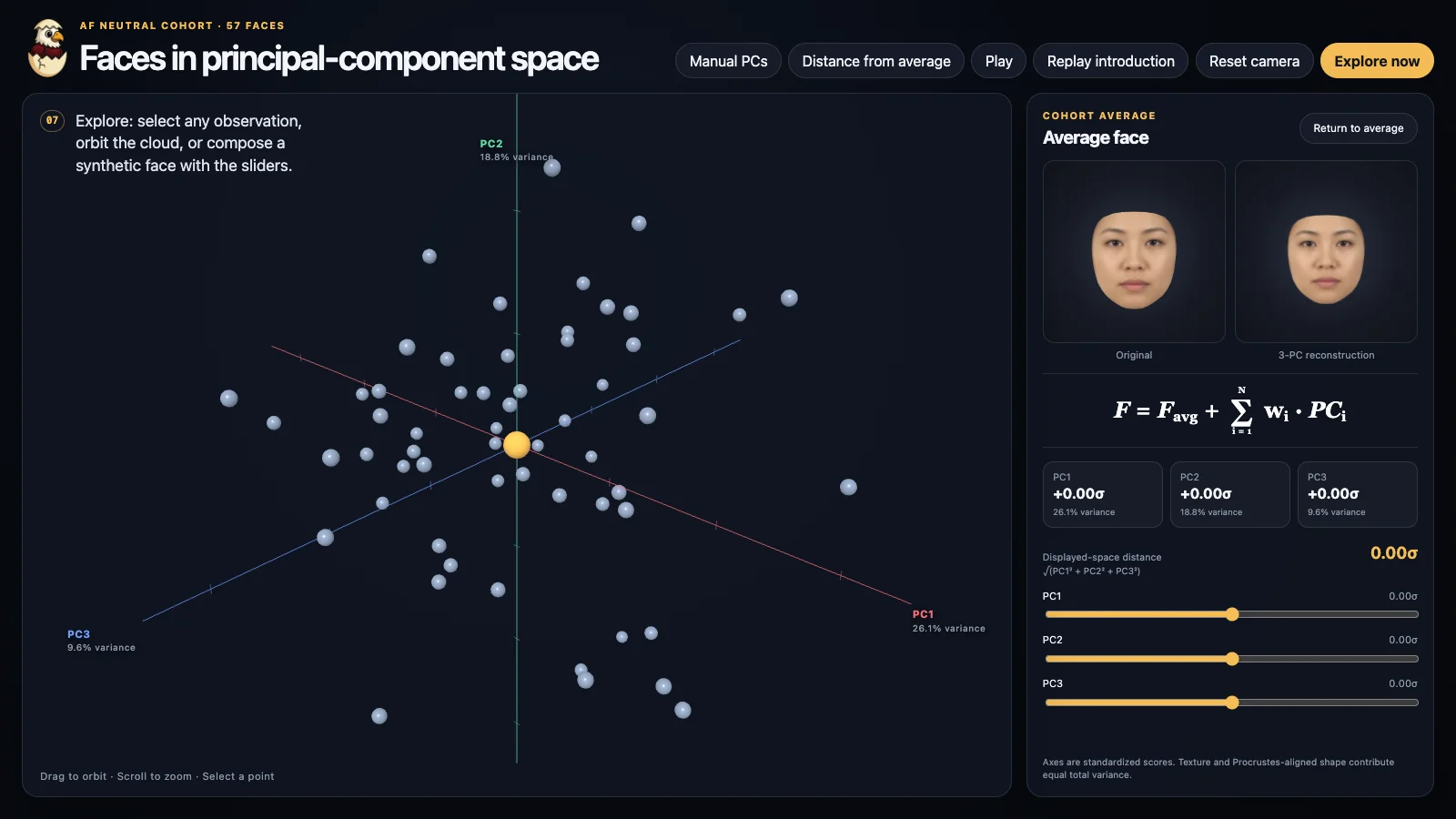
Face Space turns PCA-derived facial variation into an interactive 3D map for exploring and communicating face-perception research.
Developmental Research Database
DRDB gives developmental research teams a shared operational record for recruitment, family participation history, eligibility, scheduling, staffing, and follow-up across studies.
Research operations
06 - Communication flow
Keep the follow-up moving.
Dashboard summary for recruitment status and system updates. Reminder and templated communication tools help turn a scheduled visit into a consistent, trackable next step.
Why it matters
A shared system helps preserve operational knowledge that can otherwise become scattered across individual inboxes, spreadsheets, and short-term staff handoffs.
Carry prior participation and contact history forward to support eligibility decisions, follow-up timing, and future study planning.
Give distributed teams a shared view of participant relationships, schedules, and study activity when research is not all in one place.
Make recruitment progress, staffing needs, visit planning, and study workflows easier to review across an expanding program.
Reminder emails, follow-up, calendar sync, and templates reduce repetitive manual work.
Supports local lab use as well as institutionally hosted research environments.
Keeps essential operational context available across staff transitions and changing research conditions.
Infant Behavior Research Platform
Expressions makes high-density behavioral research more feasible for infants and children by linking facial expression, movement, audio, video, and event data without asking young participants to wear specialized equipment.
Signals captured
Demo video for the mobile sensing workflow. Playback starts only when visitors choose to play it.
Why it matters
By keeping sensing lightweight and closer to everyday interaction, Expressions can support studies that would be difficult to run with specialized, wearable, or highly intrusive systems.
Follow facial and movement signals during play-based tasks without adding wearable equipment to the experience.
Coordinate more than one device to study interactions from complementary viewpoints and timepoints.
Link behavioral change to stimuli and tasks through synchronized event markers and experiment-control workflows.
Supports privacy-sensitive approaches for child-focused research.
Connects to established experiment-control and local-network workflows.
Aligns multimodal recordings and task events in a common workflow.
Dynamic Face Eye-Tracking Analysis
iTemplate2 registers gaze data from face images and videos to a common facial template, making feature-level attention easier to compare when faces move, change expression, or appear in more naturalistic scenes.
Analysis scope
Why it matters
Frame-wise gaze-to-template mapping helps replace fixed AOIs that break down when faces rotate, deform, change expression, or share the screen with other faces.
Analyze moving, expressive faces instead of limiting studies to static and highly controlled images.
Support screen-based video and wearable eye-tracking workflows within the same face-centered framework.
Use visual overlays, heatmaps, and anatomically grounded AOIs to make feature-level results easier to inspect.
MediaPipe landmarks and multi-face tools reduce repeated manual AOI work.
An open-source Python workflow supports transparent, reusable analysis steps.
The manuscript describes optional links to facial expression and head-pose dynamics.
Interactive 3D Face-Space Explorer
Face Space builds a statistical "face space" from principal component analysis of facial shape and texture across a cohort of neutral expressions, then renders it as a 3D point cloud you can orbit, inspect, and explore. Selecting an axis or dragging a slider reconstructs a synthetic face in real time from the cohort average plus a weighted combination of components.
What it visualizes
Why it matters
Norm-based accounts of face perception describe recognition in terms of a multidimensional space centered on a population average. Face Space turns that idea into something you can see and manipulate directly, built from real facial measurements rather than a static diagram.
Give students and collaborators an explorable model of norm-based face representation instead of a static diagram.
Show how facial shape and texture variance decomposes into interpretable components, and how synthetic faces are reconstructed from them.
Built for embedding in talks and slide decks, with a guided introduction sequence and a manual exploration mode.
No installation or backend required — renders directly from precomputed PCA data.
The 3D scene and its data stay unloaded until a visitor chooses to explore it.
Derived from 57 neutral-expression exemplars in the Chicago Face Database.
Each tool starts from a concrete methodological limitation: families are hard to schedule, infant behavior is hard to measure, and dynamic faces are hard to analyze.
Build for real study constraints, not abstract software demos.
Support recruitment, collection, analysis, and team coordination together.
Combine behavioral, video, audio, gaze, and participant metadata.
Use structured outputs, quality checks, and documented processing steps.
For access, collaboration, documentation, or project-specific questions, contact the lab and tell us which tool you are interested in.